
That soft whoosh from your vents can mean almost nothing. Or it can be the first sign that your system is working a lot harder than it should. The tricky part is that the same sound shows up for a dirty filter, a leaky duct, and, on newer units, a safety device most homeowners have never heard of.
Here’s the good news. After running plenty of these calls around the Salt Lake Valley, we can usually narrow a whoosh down to one of a few causes pretty fast. Some you can check yourself in about two minutes. Others need a meter and a trained eye. If your unit is loud enough that you’re reading this late at night, a same-day air conditioning repair service in Sandy, UT is the quickest way to know which kind you’re dealing with.
This guide walks through what we actually find when we open up a whooshing system, what’s normal, what isn’t, and one brand-new reason a 2025 unit might whoosh that simply didn’t exist a year ago.
Why Does My Air Conditioner Make a Whooshing Noise?
A whooshing noise almost always comes from air moving too fast or in the wrong direction. Most of the time that means restricted airflow, like a dirty filter, closed vents, or a duct problem, forcing the blower to pull or push harder than it was built to. Less often, it points to refrigerant moving through the lines, which is strictly a job for a licensed technician.
That’s the short answer. The longer one is below, sorted the same way our crew sorts it in the field.
What We Actually Find When We Open a Whooshing System
We won’t throw fake percentages at you. But across the whooshing calls we run in and around Sandy, the cause almost always lands in one of these buckets. Here’s the at-a-glance version:
| What you hear | What we usually find | Is it normal? | Who should handle it |
| Short whoosh right at startup or shutdown | Air pressure equalizing in the ducts | Usually yes | No action needed |
| Steady whoosh that’s gotten louder over time | Dirty filter or blocked return | No | Swap the filter first; call us if it stays |
| Whistling or rushing at the vents | Closed or blocked supply vents | No | Open the vents; call if it continues |
| Whoosh paired with weak airflow | Duct leak, kink, or disconnect | No | Licensed technician |
| Hiss or whoosh near the copper lines | Possible refrigerant leak or low charge | No | EPA-certified technician only |
| Whoosh only when in heat mode | Heat pump defrost cycle | Usually yes | No action needed |
| Whoosh from a 2025+ unit you didn’t turn on | Refrigerant detection system running the fan | Needs checking | Licensed technician, soon |
Now let’s break down the ones that matter most.
A dirty filter or restricted return is the most common culprit
When a filter clogs up, it chokes off airflow. The blower then has to pull harder to get the same amount of air, and that strain shows up as a louder whoosh or whistle. Left alone, it also wears on the blower motor.
One thing that surprises people: a high-efficiency filter isn’t always better. A thick, high-MERV filter traps more dust, but if it isn’t matched to your system, it can restrict airflow and make the noise worse. Check your filter first. It’s the cheapest fix there is.
Blocked or closed supply vents push the pressure somewhere else
Close off two or three vents to “save energy” in unused rooms, and the air doesn’t disappear. It just rushes harder through the vents that are still open. That extra pressure is often the rushing sound you hear. Walk the house and make sure the registers are open and nothing (a couch, a rug, a box) is sitting on top of them.
Duct leaks, kinks, and disconnects make air change direction fast
Ducts that leak, sag, or take a sharp turn force air to speed up or swerve, and that produces a clear whooshing sound. This one isn’t just a noise problem. It’s a money problem too.
According to ENERGY STAR, a typical home loses roughly 20 to 30 percent of the air moving through its ducts to leaks, holes, and loose connections. The National Renewable Energy Laboratory (NREL) estimates that systems with ducts running through attics or crawl spaces can lose 25 to 40 percent of their heating or cooling energy on the way to your rooms. Put in plain terms: a 3-ton system pushing 1,200 CFM with a 25 percent loss is throwing away about three-quarters of a ton of cooling you already paid for.
A dirty or off-balance blower wheel adds a whirring whoosh
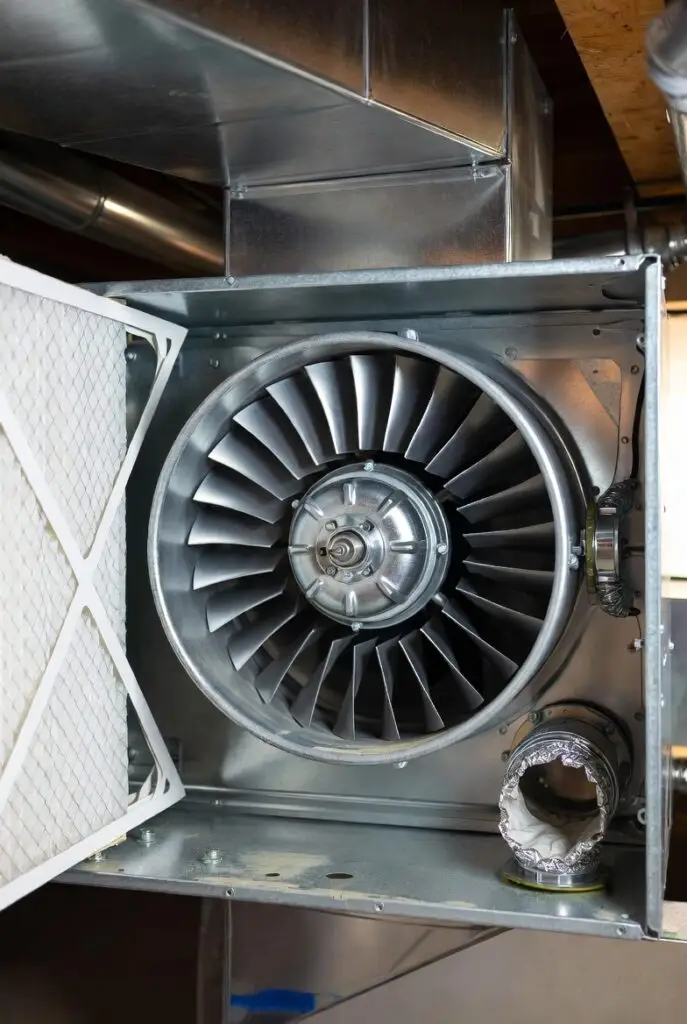
If the blower wheel cakes up with dust or slips out of balance, it makes a whooshing or whirring sound that shifts as the fan speed changes. It also grinds on the motor bearings over time. This is a clean-and-balance job, not a DIY one.
A frozen or filthy evaporator coil
A coil iced over from low airflow or a refrigerant issue can create a whoosh as air struggles past the ice. If you spot frost on the indoor coil or the lines, shut the system off and let it thaw before an HVAC tech in South Jordan looks at it.
Is a Whooshing Noise From My AC Dangerous?
Most whooshing is an airflow issue, not a safety emergency. The exception is anything that smells off, hisses near the refrigerant lines, or comes from a newer 2025 unit on its own. Those deserve a same-day look. When you’re not sure whether a sound is harmless or a warning, the safer move is to have a pro check it rather than guess.
The 2025 Refrigerant Change: A Brand-new Reason for a Whoosh
This is the part no older “AC noises” article can tell you, because the equipment is new.
Back in 2020, the AIM Act set up a 15-year phasedown of HFC refrigerants. As of January 1, 2025, the EPA’s Technology Transitions rule requires most new home AC units and heat pumps to use a refrigerant with a much lower global warming potential. That pushed the industry off R-410A and onto two replacements, R-454B and R-32, both rated by ASHRAE as A2L, or mildly flammable.
Because of that flammability rating, updated safety standards (UL 60335-2-40) now require new A2L systems to include a refrigerant detection system. Here’s the piece that matters for your ears: when that sensor detects a leak, it can shut the system down and automatically run the indoor blower to clear the refrigerant out of the cabinet. So on a 2025 or newer unit, a whoosh you never started up isn’t always a malfunction. Sometimes it’s the safety system doing exactly its job. Either way, you’ll want an EPA-certified tech to handle the AC repair, since refrigerant work is never DIY.
A couple of calm facts worth keeping in mind:
- If your current system runs on R-410A, it is not illegal and you do not need to replace it. R-410A is still made and sold for servicing existing units.
- “Mildly flammable” needs very specific conditions to ignite: high concentration, a strong ignition source, and almost no air movement, which basically never happens in a properly installed home system.
- If anyone tries to scare you about A2L flammability to sell you a full replacement, treat that as a red flag about the contractor, not the refrigerant.
How a Technician Actually Finds Where the Whoosh is Coming From
You don’t have to guess at this part, and neither do we. The trade has real numbers for it, mostly from the National Comfort Institute (NCI).
Most home blower fans are rated for a maximum of about 0.5 inch of water column of static pressure. Push past that, and the fan can’t move the air it’s supposed to. NCI’s field data shows the problem is widespread: many systems run total static pressure well above 150 percent of the fan’s rating, and the issue usually goes unnoticed for years. They’ve also found that over 60 percent of systems move less than 340 CFM per ton, when the industry target is 400 CFM per ton.
When we localize a whoosh, we lean on a simple pressure budget that NCI teaches: roughly 20 percent of the resistance belongs to the filter, 40 percent to the coil, and 40 percent to the ducts and registers. Measuring across those points tells us where the squeeze is, instead of swapping parts and hoping.
Want a straight answer on your unit instead of a guess? The team of HVAC experts in Provo, UT at One Stop Heating and Air Conditioning can put a gauge on your system and tell you exactly where the noise is coming from, often in a single visit. We serve Sandy and nearby cities including Draper, Riverton, South Jordan, West Jordan, Holladay, and Cottonwood Heights.
Why Does My Heat Pump Whoosh in Winter?
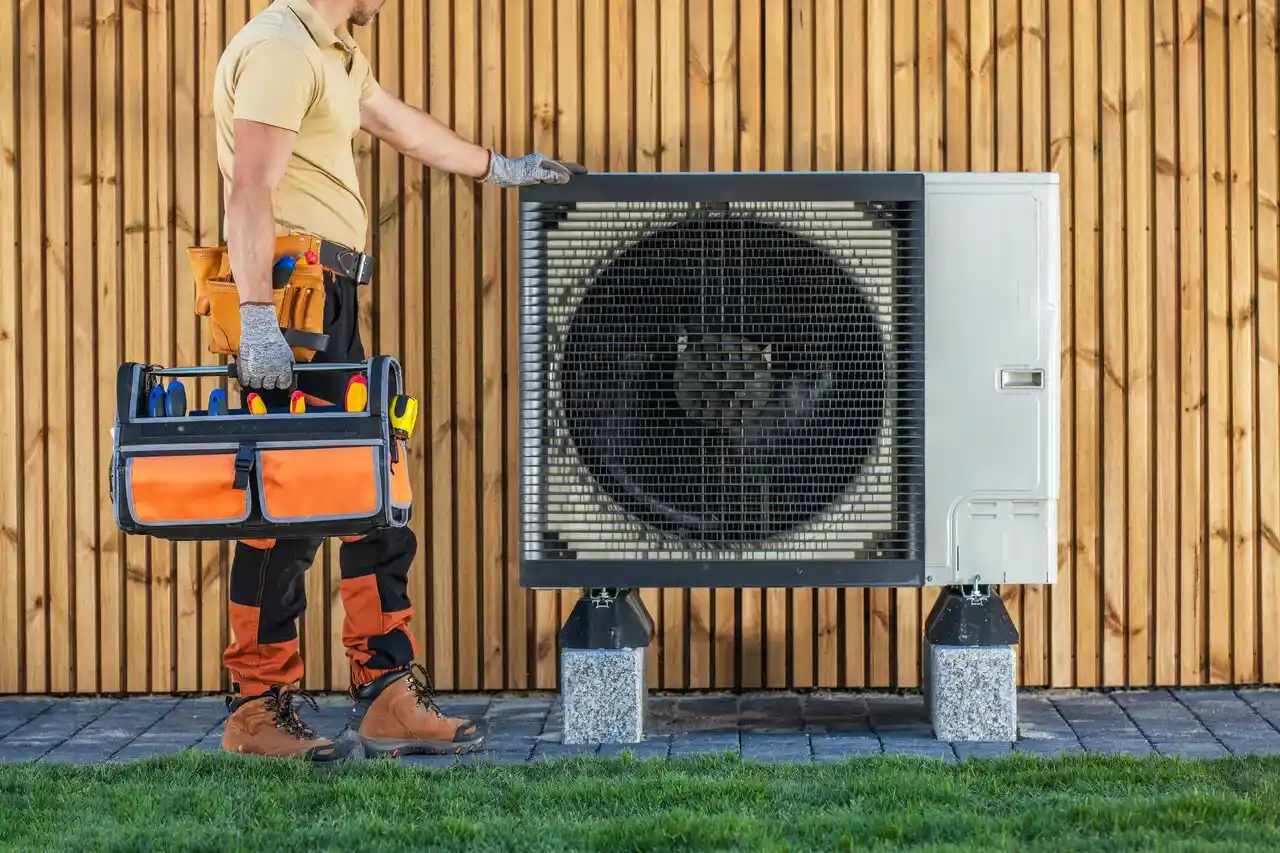
If you run a heat pump and hear a whoosh in heating mode, it’s usually the defrost cycle. To melt frost off the outdoor coil, the unit briefly reverses into cooling mode, and that switch is when the whoosh happens. If it only shows up in heat mode and lasts a short while, that’s typically normal operation.
When a Whoosh is Completely Normal
Not every sound is a problem, and we’d rather you save the service call when you don’t need one. A brief whoosh right when the system kicks on or shuts off is usually just air pressure equalizing inside the ducts. Short, predictable, and gone in a second or two? That’s the system breathing. It’s the steady, growing, or hissing kind that’s worth a closer look.
Get a Quiet, Efficient System Again
A whoosh is your AC telling you something. Usually it’s a filter or a vent. Sometimes it’s a leaky duct quietly wasting a quarter of your cooling. Once in a while, on the newest equipment, it’s a safety sensor that needs eyes on it. The only way to know for sure is to measure, not guess.
If the sound is new, getting louder, or coming from a 2025 unit on its own, reach out to One Stop Heating and Air Conditioning. We’ll diagnose the real cause, walk you through what we find, and fix it without cutting corners. No scare tactics, no upsell games, just a system that runs quietly and uses the cooling you’re paying for.
Frequently Asked Questions
Why does my AC whoosh only when it turns on or off? That’s almost always air pressure settling inside the ductwork as the blower starts or stops. A short whoosh at those moments is normal and nothing to worry about.
Why is the whooshing coming from my outdoor unit? On a heat pump, a whoosh outside in winter is usually the defrost cycle reversing the refrigerant flow. If it comes with hissing or shows up in the cooling season, have a tech check for a refrigerant or fan issue.
Can a dirty air filter really cause a whooshing sound? Yes. A clogged filter chokes airflow, so the blower works harder and the rushing air gets louder. Changing the filter is the first thing to try.
Does low refrigerant make a whooshing or hissing noise? It can. Low charge, a leak, or a line restriction can create a whoosh or hiss as refrigerant moves through the system. Because handling refrigerant requires certification, this always needs a licensed, EPA-certified technician, never a DIY fix.
Why is my cold air return so loud and whooshing even with no filter in it? With no filter slowing the air, the return can pull air fast enough to create noise on its own, especially if the return is undersized or the duct has a tight bend. A pressure reading at the return tells us whether the duct itself is the problem.
Will the new 2025 refrigerant systems make different noises? They can. New A2L units include a refrigerant detection system that runs the indoor blower if it senses a leak, so a 2025 or newer unit may whoosh on its own. That’s a safety feature working as designed, and it should be checked by a licensed tech.
How much will it cost to fix a whooshing AC? It depends entirely on the cause, from a simple filter swap to a duct repair. We don’t post fixed prices because every home is different. The honest answer is to get a quick diagnosis first so you only pay for what your system actually needs.