
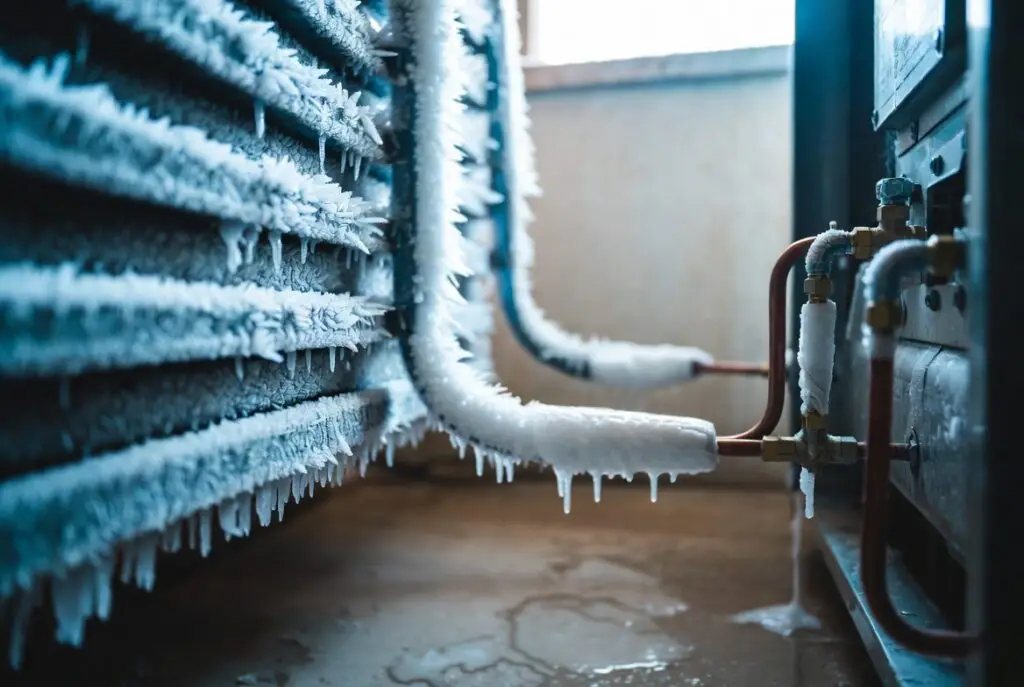
You walk past your AC unit and notice something that stops you cold: it’s covered in ice. In the middle of summer. That’s not something you’d expect from a machine that’s supposed to cool your home, not turn into a glacier.
Here’s the thing though, a frozen AC is one of the most common calls we get at One Stop Heating and Air Conditioning, especially during the hottest months in Sandy, UT and the surrounding Salt Lake Valley area. And while it looks dramatic, the cause is usually one of a handful of well-known problems.
The tricky part? It almost never fixes itself. And running a frozen system can seriously damage your compressor, which is one of the most expensive parts to replace. If your unit is iced over right now, the first thing you should do is turn it off and then keep reading. If you’re already at the point where you need a professional to take a look, you can learn more about air conditioning repair in Sandy, UT and what to expect.
Why Is My Air Conditioner Freezing Up?
Your AC’s evaporator coil, located inside the unit, works by absorbing heat from the warm air flowing over it. When that warm air stops flowing properly, or when refrigerant pressure drops too low, the coil gets too cold. Moisture in the air then freezes right onto it.
It’s a chain reaction. And it doesn’t stop on its own.
Here are the most common causes, ranked by how often we see them:
The Most Common Reason: Restricted Airflow
This is the #1 cause of frozen AC coils, and it’s also the most preventable.
When warm air can’t reach the evaporator coil in sufficient volume, the coil temperature drops below freezing. Ice forms. The problem gets worse as the ice blocks even more airflow, and the cycle continues.
Restricted airflow usually comes from:
- A dirty or clogged air filter (most common culprit)
- Blocked return vents or registers covered by furniture or rugs
- Closed supply vents in unused rooms
- Obstructed or collapsed ductwork
According to Lennox (updated August 2025): dirty air filters restrict airflow, causing the coil temperature to drop and eventually freeze.
Trane, whose 2024 guidance is still current and widely referenced, lists a dirty filter as cause number one and notes it often leads to a dirty coil as a secondary problem.
What you can check yourself: Pull out your air filter. If it looks gray, clogged, or hasn’t been changed in more than 3 months, that’s likely a major contributor. Standard filters should be replaced every 1 to 3 months, and more frequently if you have pets, allergies, or a dusty home.
That said, replacing the filter alone won’t always solve the problem if the coil has already iced over or if there are other contributing issues.
Low Refrigerant: A More Serious Cause
Refrigerant doesn’t “run out” on its own. If your system is low, that means there’s a leak somewhere.
When refrigerant levels drop, pressure in the system falls with them. Low pressure causes the refrigerant to expand and cool far more than it should. The result? Ice on the coil and refrigerant lines.
Multiple 2025 sources, including service guides from Lennox and HVAC industry sites, confirm that low refrigerant from leaks is one of the top triggers for frozen coils. More importantly, running your system in this condition puts serious strain on your compressor.
This is not a DIY fix. Refrigerant handling requires EPA Section 608 certification, and as of January 1, 2026, there are stricter federal rules in place (more on that below).
Dirty Evaporator Coils
If you haven’t had your system professionally serviced in a while, the evaporator coil itself may be coated in dust and debris. That buildup acts like insulation, blocking the coil from absorbing heat the way it should.
This is often a secondary issue that develops after neglected air filters. Trane and industry service sites updated in 2025 both confirm it’s a common contributor to freeze-ups.
You can’t clean evaporator coils yourself safely. This requires a professional visit with the right tools and cleaners.
Blower Fan or Thermostat Problems
If your blower fan is running slower than it should (due to a failing motor or capacitor), airflow is reduced even if everything else looks fine. A faulty thermostat can also keep the system running longer and colder than needed, leading to the same coil freeze problem.
These are less common causes, but they come up regularly enough that a thorough diagnosis should rule them out.
What the New 2026 EPA Rules Mean for You
If your AC is freezing up due to low refrigerant, there’s something important you should know about new federal regulations that took effect January 1, 2026.
Under the updated AIM Act HFC Management Rule:
- Leak repair rules now apply to residential and light commercial systems with a full refrigerant charge of 15 pounds or more (previously this threshold was 50 pounds)
- Certified technicians must follow mandatory leak detection, repair timelines (typically 30 days), verification testing, and recordkeeping for HFC refrigerants like R-410A and newer blends like R-454B or R-32
- Systems leaking more than 125% of their full refrigerant charge annually are classified as “chronically leaking” and must be reported to the EPA
Source: EPA official fact sheets (January 2026), summarized by legal and compliance firms including Hunton Andrews Kurth and Baker Botts.
What this means practically: Any refrigerant-related repair on your AC is now handled under stricter rules, even for residential systems. Only EPA-certified technicians can legally work with refrigerant. This is another reason why a frozen AC due to low refrigerant isn’t something to put off or attempt on your own.
At One Stop Heating and Air Conditioning, our technicians are EPA certified and up to date on the 2026 compliance requirements. We handle refrigerant repairs correctly, with the documentation and verification the rules require.
What To Do Right Now If Your AC Is Frozen
Do not keep running a frozen system. Trane’s direct guidance is clear: running the system with a frozen evaporator coil can cause irreparable damage to the condenser unit and is harmful to the compressor.
Here’s what to do while you wait for a professional:
- Turn the thermostat to OFF immediately. Don’t switch it to a warmer setting, just off.
- Set the fan to ON (not Auto). This keeps air moving across the coil so it thaws faster without running the cooling cycle.
- Check and replace your air filter if it’s dirty.
- Do not chip or scrape the ice. That can damage the coil fins and refrigerant lines.
- Place towels around the unit to catch water as the ice melts. Thawing can take several hours.
- Do not restart the cooling mode until a professional has inspected the system. Even if it looks fine after thawing, the root cause is still there.
Why This Keeps Happening (And How to Stop It)
A one-time freeze might be triggered by a forgotten filter change. But if your AC freezes up repeatedly, there’s an underlying issue that needs to be found and fixed.
Ongoing freeze-ups are usually caused by:
- A refrigerant leak that hasn’t been repaired
- A damaged or underperforming blower motor
- Dirty coils that have never been professionally cleaned
- Chronic airflow restrictions from poorly placed vents or duct issues
Frozen AC is one of the most common summer HVAC complaints across the country, and particularly in hot, dry climates like Utah’s Salt Lake Valley. The underlying cause almost never resolves on its own.
The best protection is a professional tune-up every spring, before the heat hits. A thorough maintenance visit includes coil cleaning, refrigerant level checks, airflow verification, and a look at the blower and thermostat. Lennox’s updated 2025 guidance confirms that regular filter changes and seasonal tune-ups prevent most freeze-ups from happening in the first place.
One Stop Heating and Air Conditioning offers AC maintenance visits designed to catch these issues before they turn into a mid-summer breakdown. Scheduling before the hottest part of the year means you’re not waiting in line when everyone else’s system is also acting up.
One More Thing Worth Knowing
Your indoor air quality plays a role here too. Systems that run more efficiently, with clean coils and proper airflow, also do a better job of managing humidity. If you’ve been dealing with recurring freeze-ups and are also noticing humidity or air quality issues in your home, that’s worth mentioning when you call. We install whole-home solutions like the REME HALO® air purification system and media filtration as part of a complete comfort setup.
Don’t Let a Frozen AC Turn Into a Bigger Problem
A frozen coil is your system’s way of telling you something isn’t right. The longer it goes unaddressed, the closer you get to compressor damage, which turns an inconvenient repair into a major replacement cost.
If your AC is iced over, thaw it out following the steps above and call One Stop Heating and Air Conditioning to schedule an inspection. We serve Sandy, UT and the surrounding areas including Draper, South Jordan, West Jordan, Cottonwood Heights, Riverton, Salt Lake City, Orem, Lehi, American Fork, Saratoga Springs, Eagle Mountain, Herriman, Holladay, West Valley City, Tooele, Bountiful, Farmington, Layton, and Highland.
Our team is friendly, our service is fast, and we’ve been doing this long enough to have seen every version of this problem. We’ll find what’s actually causing the freeze and fix it the right way.
Call or contact us online to schedule your AC inspection today.
Frequently Asked Questions
Why is my AC freezing up in the summer? It usually comes down to restricted airflow or low refrigerant. When warm air can’t reach the evaporator coil, the coil drops below freezing and moisture turns to ice. A dirty air filter is the most common trigger. Low refrigerant from a leak is the second most common cause and requires a certified technician to repair.
Can I still run my AC if it’s frozen? No. Trane’s official guidance is clear that running a frozen system can cause irreparable damage to the compressor and condenser unit. Turn it off, switch the fan to ON to thaw it, and call a professional before restarting the cooling mode.
How long does it take for a frozen AC to thaw? It can take anywhere from a few hours to most of a day, depending on how much ice has built up. Running the fan on ON (without cooling) speeds up the process. Keep towels around the unit to catch water runoff.
Can I fix a frozen AC myself? You can replace a dirty air filter, clear blocked vents, and let the unit thaw. But the underlying cause usually requires a professional. If it’s a refrigerant leak, federal law requires an EPA-certified technician to handle it under the updated 2026 HFC Management Rule.
How do I prevent my AC from freezing up again? Change your air filter every 1 to 3 months, keep return and supply vents clear of furniture and rugs, and schedule a professional AC tune-up every spring. Regular maintenance catches refrigerant issues, dirty coils, and airflow problems before they cause a freeze-up.
Does a frozen AC mean I need a new system? Not necessarily. Most freeze-ups are caused by fixable issues like dirty filters, refrigerant leaks, or dirty coils. A professional inspection will tell you what’s actually wrong. Compressor damage from a prolonged freeze-up can sometimes make replacement the more practical option, which is why catching it early matters.
Is AC freezing up covered under warranty? It depends on your system’s warranty terms and what caused the freeze. Damage resulting from lack of maintenance or refrigerant leaks may not be covered. A licensed HVAC technician in Bountiful, UT can help you document the cause and work through the warranty process if applicable.
Why does my AC freeze at night but not during the day? Outdoor temperatures dropping below about 60°F can disrupt the pressure balance in your system, making freeze-ups more likely during cooler nighttime hours. This is a separate issue from airflow restriction or refrigerant loss and also requires professional diagnosis.